
Here we go again ….China Belt and Road Initiative (BRI) in Guyana.
It’s another form of bait and switch, loan churning, that began way back in 1972..some say.
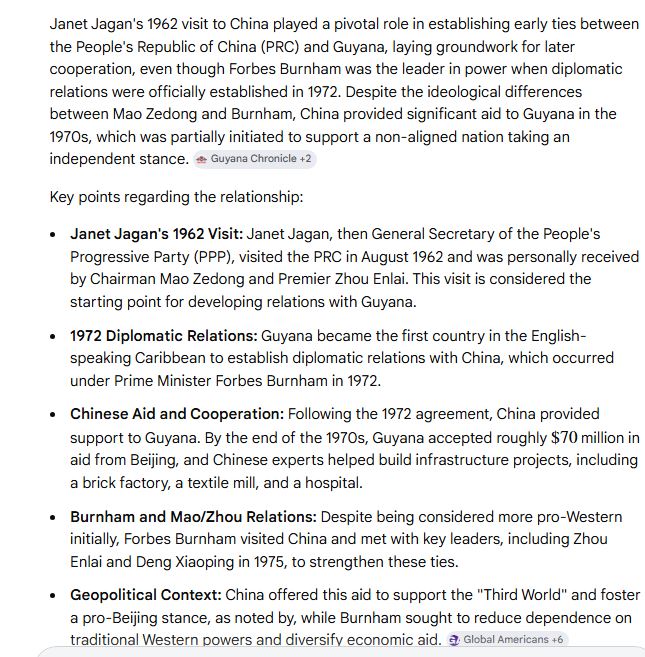
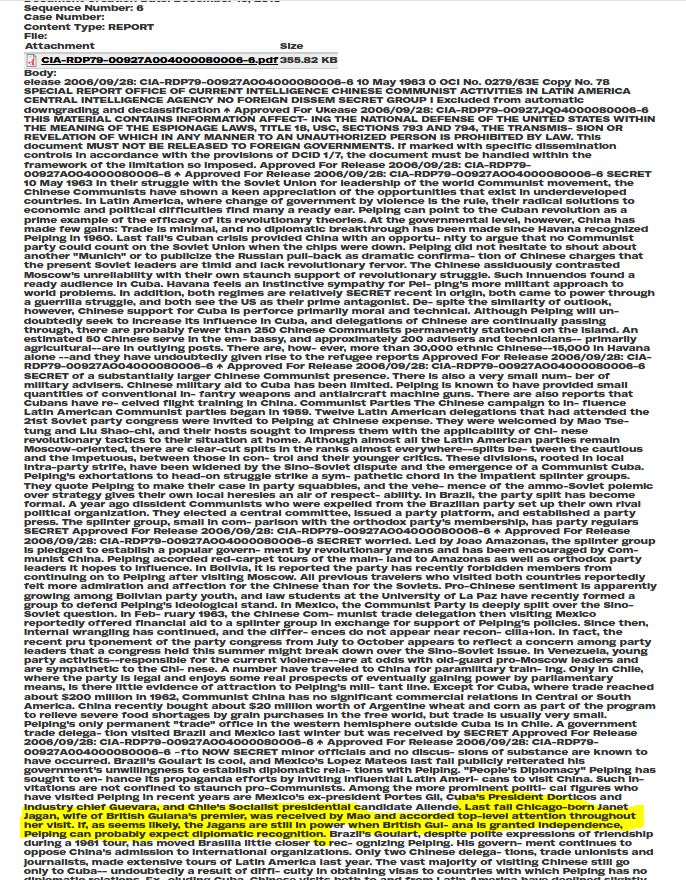
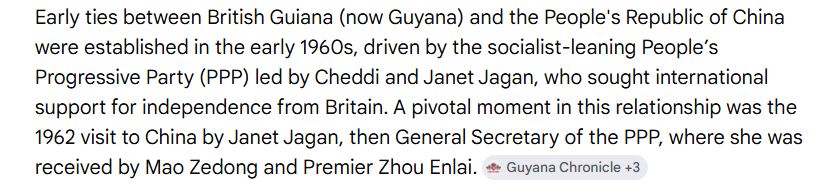
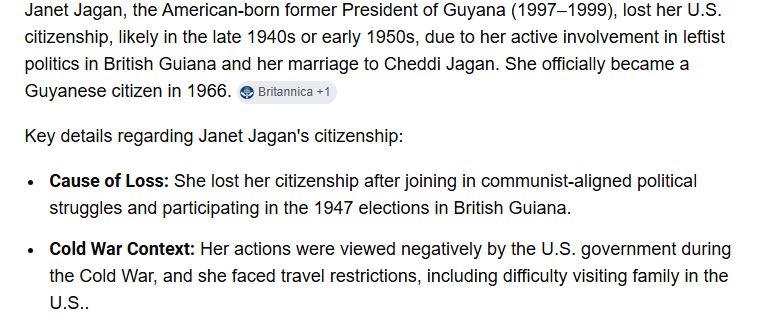
It may have become a pipe dream since 1962 when British Guiana’s Janet Jagan visited China’s Mao Tse tung. The country was still under colonial rule. The subterfuge was the intrigue that softened Mao –we’re thinking -which established those early Guyana ties.
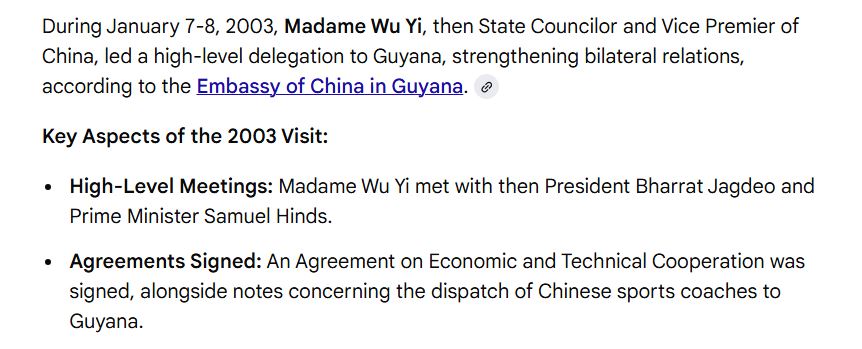
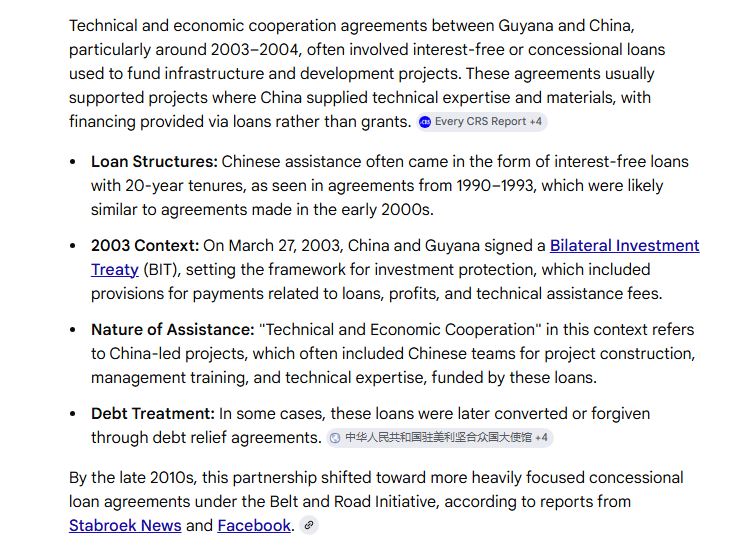
In 2003, aMadam Wu Yi –came to Guyana. The visit was billed as one to strengthen bilateral relations. An agreement on economic and technical cooperation was signed. This was all to lay the groundwork, our opinion, for more concessional agreements – ‘we give you the money but you have to hire us to do the work, so we can get the money back from you with interest’.
It’s a pick pocket scheme with a patina of legitimacy.
But to create an accurate perspective, we have to go back to the oldest records we could find on indebting Guyana by local political leadership.
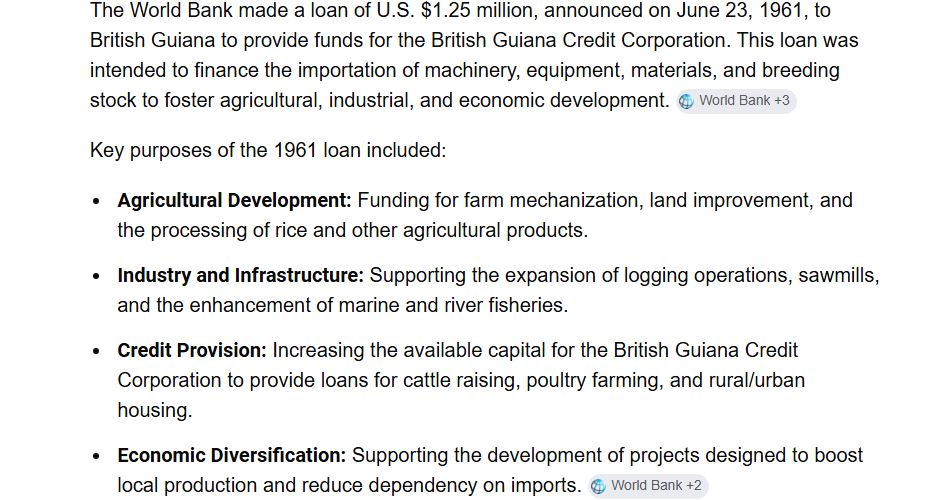
In 1961 , the PPP took a loan against the country, and by extension, its citizens for agricultural purposes. We’ve cited this primarily because the disinformation machine ascribes the genesis of the country’s debt and fiscal mismanagement, even today, to the ‘Burnham era’.
And there’s more.
Peter Diaguiar, as chancellor of the country’s Exchequer, discovered the financial mess PPP books were in, when the PNC/UF Coalition ascended to office in 1964. Civil Servants had not been paid for up to 3 years at a time.
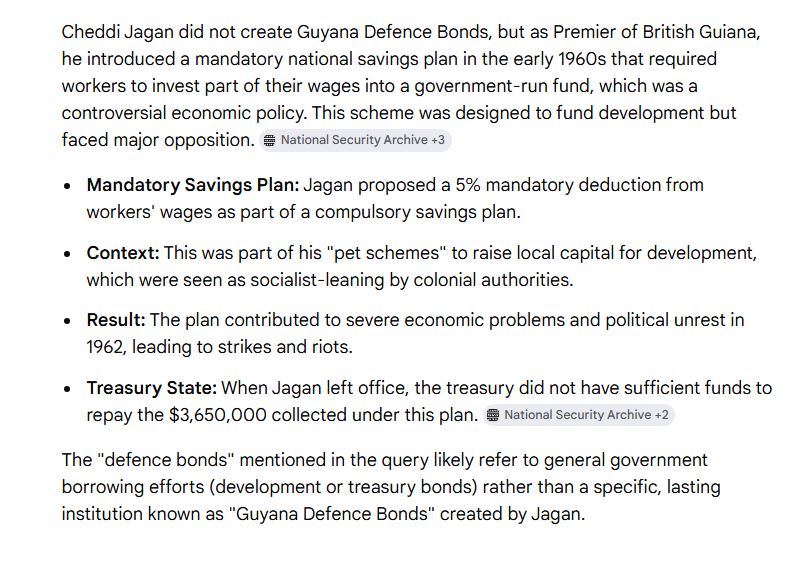
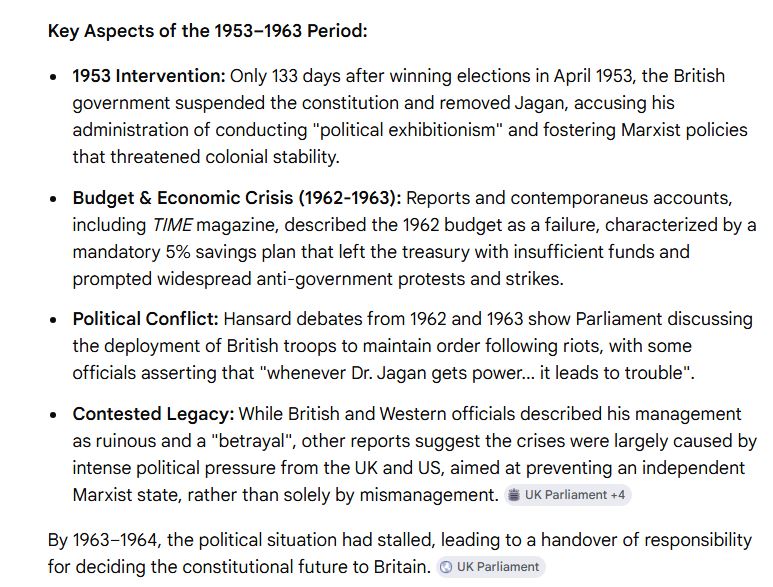
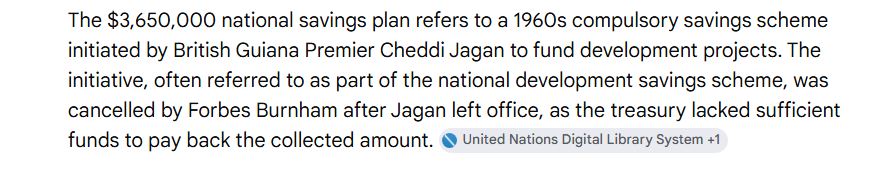
Cheddi had, also, implemented a mandatory ‘savings plan’, seizing 5% of worker income. When he left office, the treasury did not have the $3, 650,000 collected under his plan.
And all this is the tip of the poisonous spear that was fiscal administration under the 1953- 1964 PPP and the Jagans, who were in Premiership of the country.
There’s typically poor recall or convenient forgetfulness when monetary mismanagement is replayed by the PPP, who never mention these financial misadventures.
It’s our privilege to provide the service.
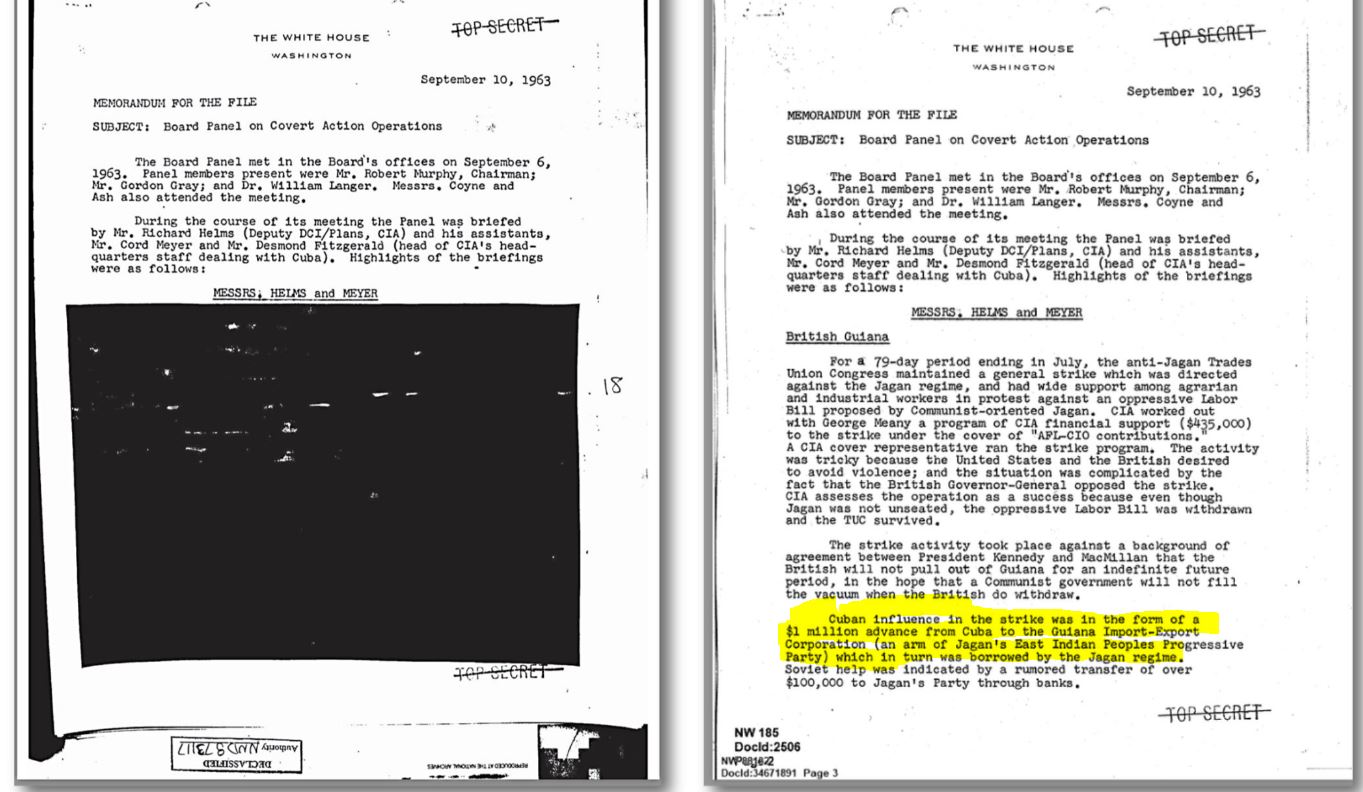
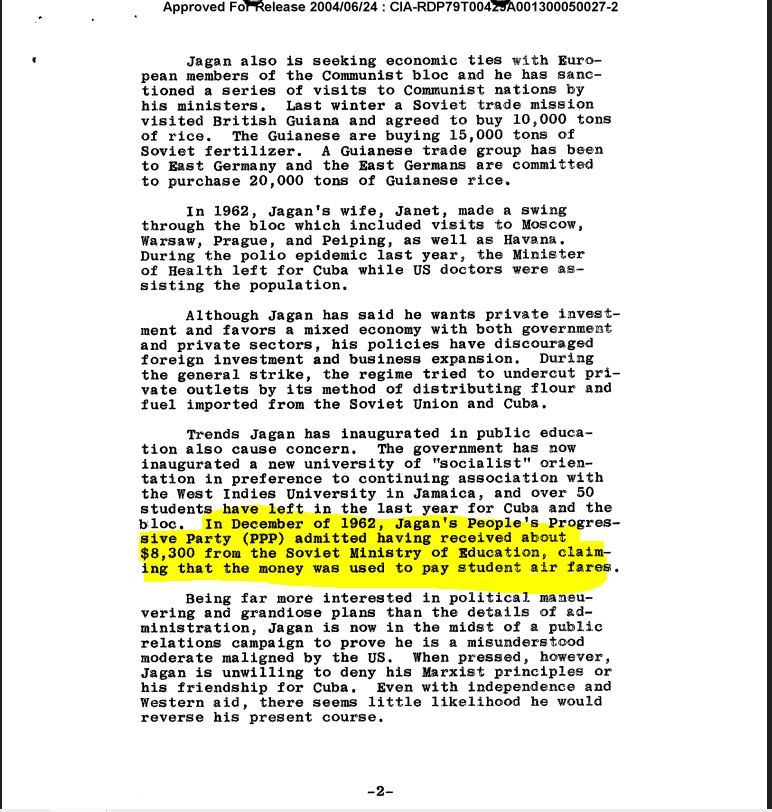
We still don’t know what other loans the PPP had indebted the country to, that were misrepresented in one reporting fashion or other. What we’ve found is two references to moneys Jagan got from various sources. From Cuba he got 1 million. From the Soviet Union he got $8,300.
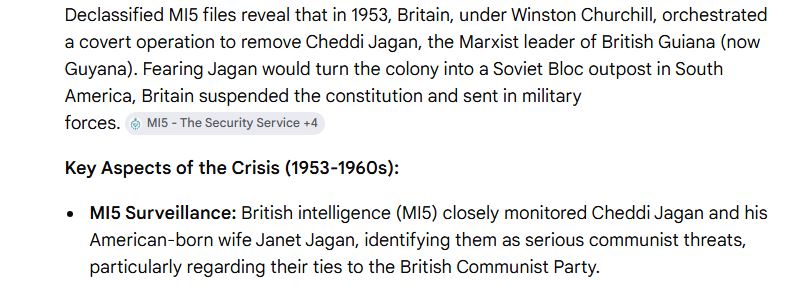
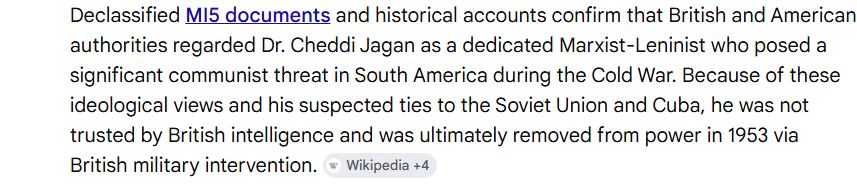
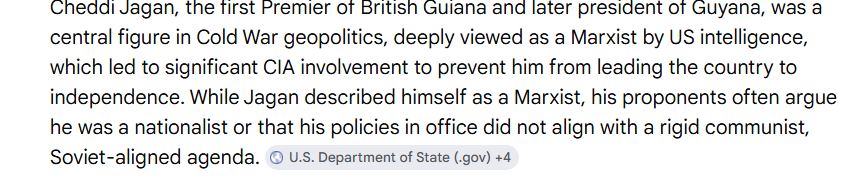
Subsequent consensus from the intelligence agencies of the superpowers of the era, Britain and America, provided starker warning. Both he and Janet were deemed ‘not to be trusted’ by premier Agencies MI5 and CIA.
With economic mismanagement not to be unexpected from the Jagan Administration, it is prudent to assume other nefarious financial misadventures were part of the inheritance of the succeeding government. We do know that the debt to the employees who paid into PPP’s fund raising scheme was absorbed by the country…which means every citizen lost.
It’s another financial blunder committed under the Jagans and the PPP that’s never recalled by the country’s dedicated political dis-informants. This, too, falls under the service we provide.
And all this brings us to the loans for the various forms of construction that the country has embarked upon…mainly through Chinese funding.
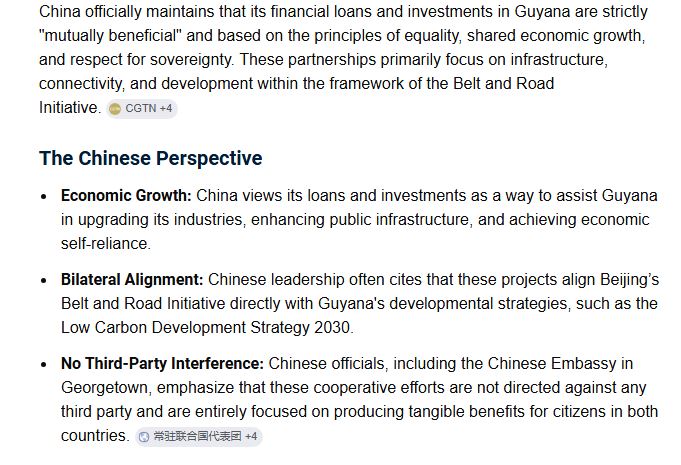
The ‘mutually beneficial’ encasement that wraps the loans is the first hint at trap- debt and land. It’s an opaque practice which under-girds the predatory intent of the ‘loans’ that are structured to maintain an endless cycle of indebtedness/entanglement that is central to China’s business model.
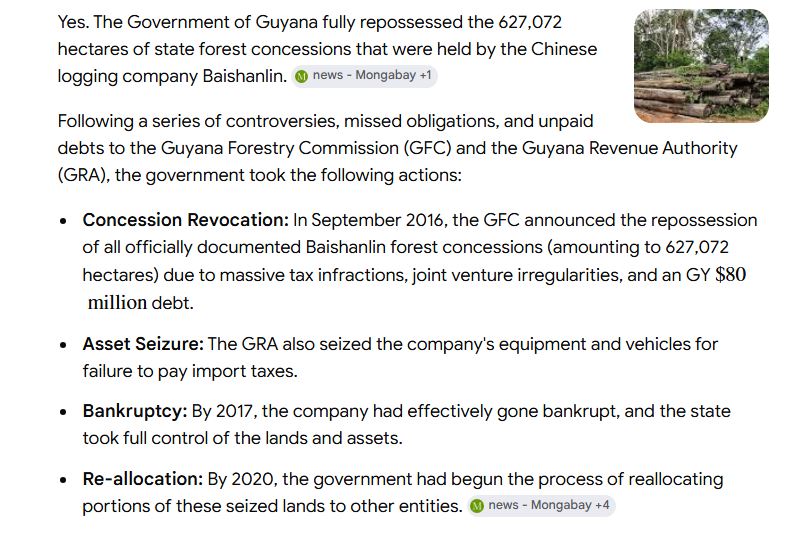
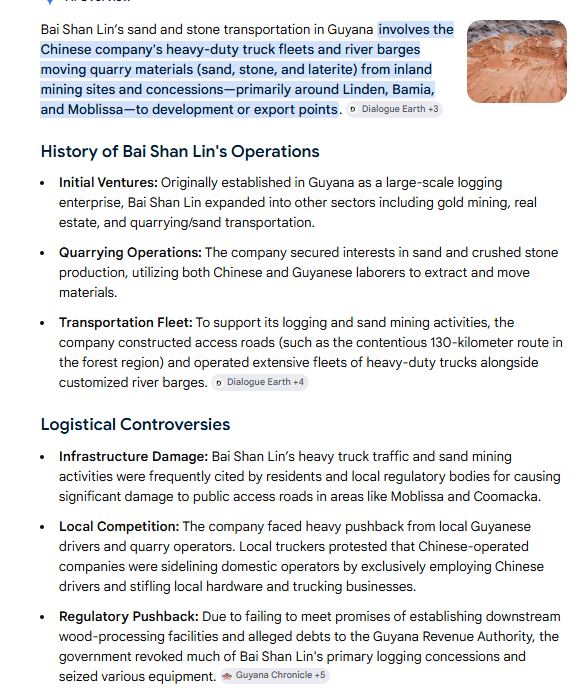
We, clearly, remember the logging contract of Bai Shan Lin. We remember it’s expanded land claim and failure to build the wood processing factory after tax exemption of GYD 80million.
That became a fiasco of ill intent and the repo- man taking back 627, 072 hectares 2421.14 square miles of our soil from Bai Shan Lin.
The government has that kind of land to gamble with, amidst a visible, palpable and protracted homeless crisis in the country.
We remember how Bai Shan Lin turned to gold mining, sandstone transportation and massive real estate investment . None of this was alluded to in original agreements, even in boiler plate terms of ‘any other business ’, it is said.
That’s the aggressive nature of their economic help – control assets and by extension economy.And, they’re that dug in to 151 countries with a combined GDP of 41 trillion and 5.1 billion people. They’ve already invested USD10 billion in Guyana which is it’s third most heavily invested in ‘ victim ’.
And here’s what else Chinese influence does to Guyana.
The plotted out come of Debt Trap, is sufficed only by a plethora of economic demands that gives right to their businesses becoming the country’s economic hub.
Their stores replace the ‘mom and pop’ businesses with products that fail muster in Western nations. The typical contract that foreign investors hire an agreed upon percentage of local labor seems not be enforced. Under-aged female employment and sexual abuse pepper the Chinese business model in the country. Their racial discrimination against Afro Guyanese has been reported to the United Nations.
And all this smells like the ‘pay the piper’ bounty that comes with Chinese aid – One Belt, One Road, New Silk Road…the curious assembly of words to profess some stab at ideology.
Now that they’ve been invited to submit proposals- in a competitive process no less– to build the Amalia Falls electric grid, we have to look back at spending on this project that exists on a floating scale having started some 17 years ago.
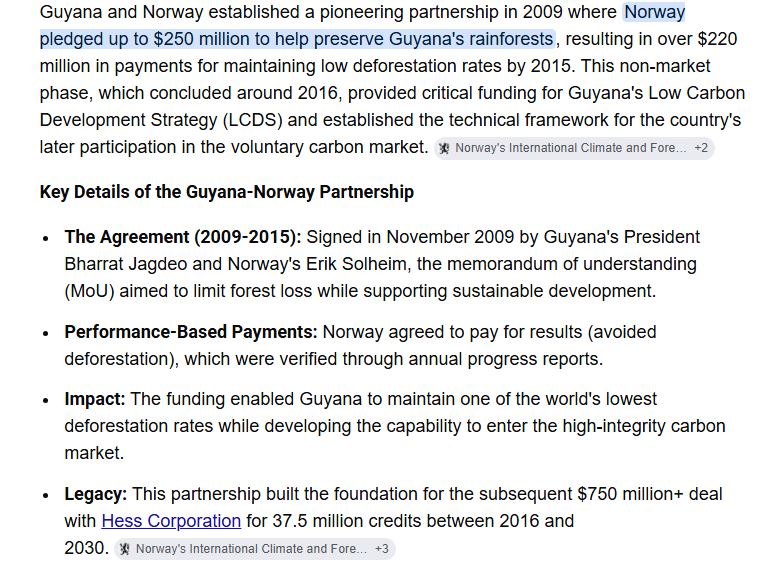
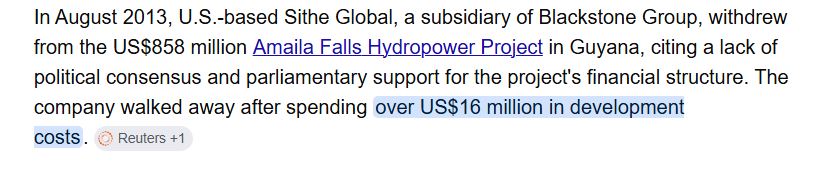
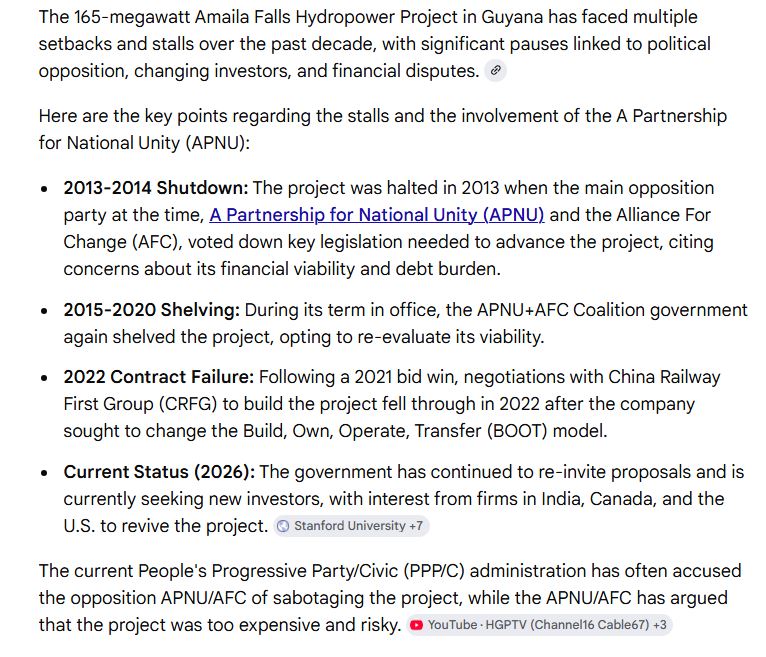
We remember expenditure under Ramotar. We know that there was a first of its kind carbon credit from Norway worth some 750 million. We know Sithe Global pulled out of the project after spending $16million. We know the projected cost was $858 million. We know the project was halted by APNU on grounds of seeking more accounting and accountability.
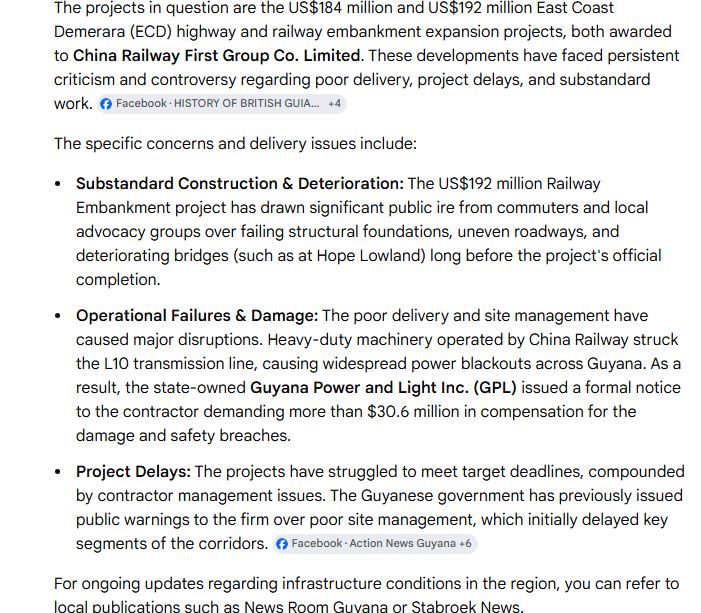
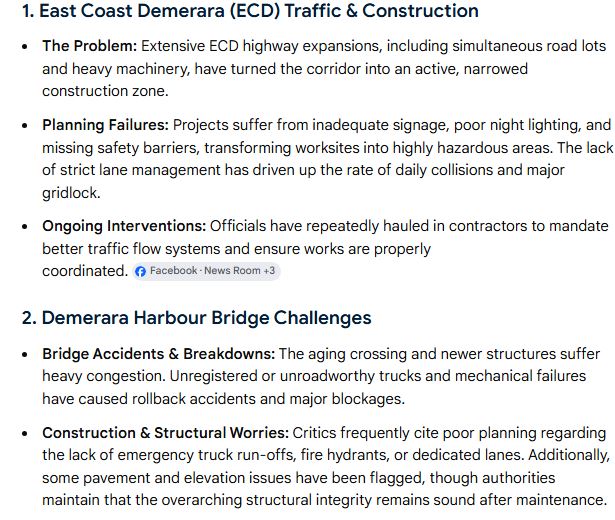
China Railway Group,’s record of poor engineering is demonstrable on Guyana’s roads and bridges. With this blemished resume, it’s now touted to construct the national electric grid. This should cause escalating concerns, given its production record of poor safety, quality and reliability.
And spending should remain a key focus…given China’s business model.
The project was suspended around 2011 after an ostentatious signing ceremony for $495,058,158…approximately half a billion USD.
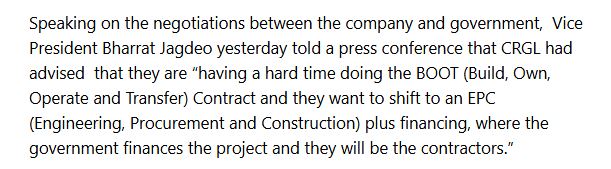
In 2022, Jagdeo said that China Railway Group was having difficulty raising the roughly 1 billion cost for the electricity project. What arrested our attention in the statement was China’s ‘suggestion that Guyana funds the nearly USD 1billion contract and they- the Chinese- be the contractors. ..which launches predatorial lending to an uber stratosphere.
Now that Guyana’s oil revenue is peaking past projection , we’ll be focusing on all the data outlets to see if there has been a decision change – if Guyana is footing the bill and hiring the Chinese.
Being proponents for an electricity grid, is inextricably intertwined with the housing crisis. If building a grid to serve the population is the intent then part of that intent has to be deliberate. The other part has to be purposeful housing of the unhoused.
The power grid is a public good funded by society at large. Everyone contributes to its maintenance and expansion, whether through fixed monthly connection fees, general tax revenues, or rate structures. These payment methods balance the costs among the strata that creates society.
And, it is the Oppositions’ duty to observe its spending and relay if it’s being more squandered than spent. Its duty, too, is to ensure the Natural Resource Fund is fed its correct percentage with the windfall factored in.
We’re saying this as observers of the resource curse, of how easily immense wealth can distort an economy. If ever the Opposition needed to be duty bound it’s now…NOT WITH RHETORIC BUT COUNTER MEASURES.
Lots going on here. Chinese funding with the risk of inherent debt trap, poses significant risk to Guyana’s sovereignty. Revenue windfall is added incentive for mismanagement. The watch dog now is the Opposition…collective and individual.
Calling for transparency without specifics is not a genuine demand for accountability.
Not citing oil production versus revenue metrics –which can be found in most oil production news organs – shows a lack of rigor and a fundamental misunderstanding of core mechanics.
An Operational Opposition would have the expertise –even if hired– to represent its constituents at this level. Technical expertise is required to protect national interests during resource booms, especially when the Belt and Road Initiative is part of past funding.
China is always coming for it’s pound of flesh.